 Literanista
September 18, 2026
Literanista
September 18, 2026
Women We Have Learned to Fear
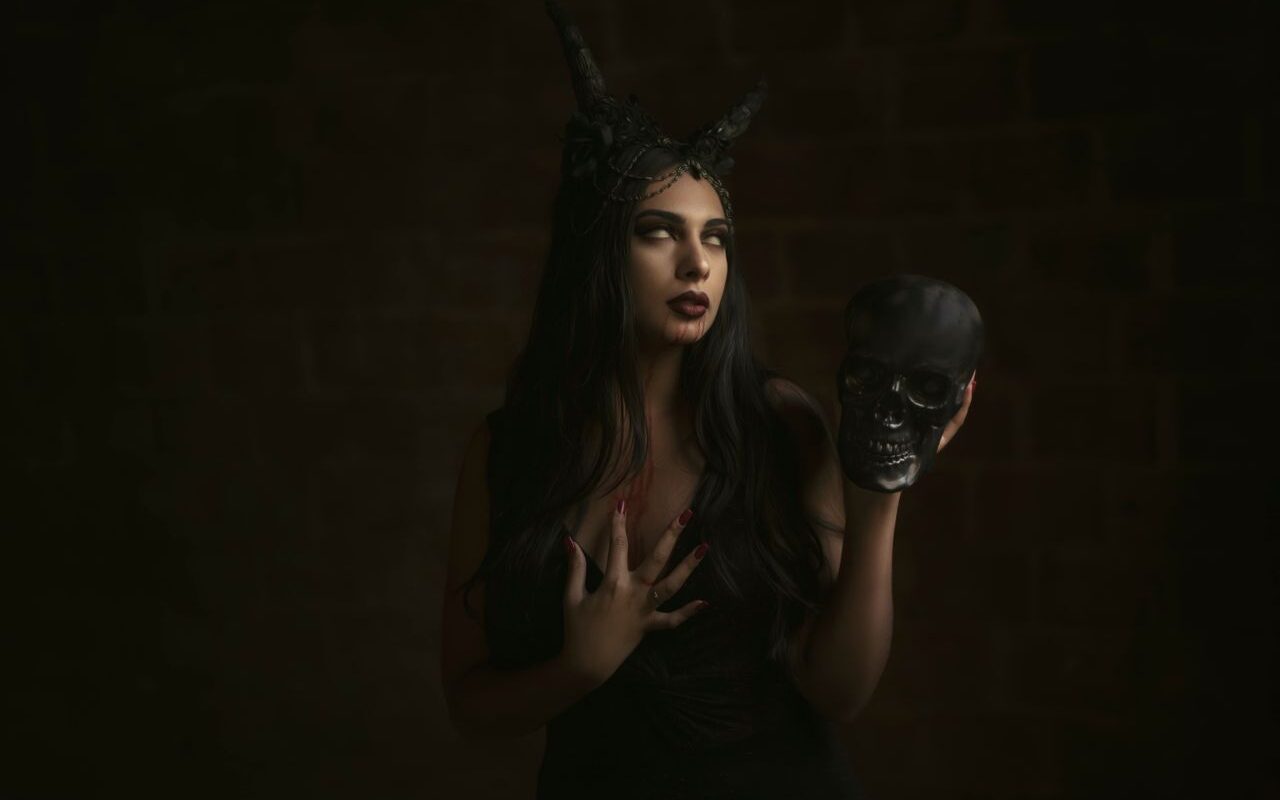
There is a woman we have learned to call the witch.
She is old, although not always. Poor, unless she has suspiciously acquired money of her own. Unmarried, widowed or insufficiently interested in marriage. She knows which plants cure a fever. She delivers babies. She talks too loudly. She lives alone. She enjoys sex too much or has no use for it at all. She rescues animals. Her neighbors find her difficult. Men find her disobedient. Children fear her. Eventually someone points an accusatory finger.
It is an extraordinarily satisfying story. One most of us know well but it’s not quite a historical one.
The feminist witch who has emerged over the past half-century is partly a recovered historical figure and partly a woman we invented because we needed her. We have turned the witch into the ancestral herbalist, the village midwife, the childless woman, the crone, the sexual outlaw, the woman who refused marriage, the woman who possessed knowledge men wanted for themselves. She has become an emblem of female rage and female autonomy, emblazoned across T-shirts and protest signs, novels and television shows, tattoos and TikTok accounts.
Actual witchcraft accusations were considerably stranger.
They grew out of religious belief, neighborly antagonism, inheritance disputes, illness, infertility, crop failures, childbirth, poverty, sexuality, jealousy and profound social change. Women were overwhelmingly represented among the accused across much of early-modern Europe, although men were accused too and the proportions varied dramatically by place. Historians continue to debate precisely why women were so vulnerable to the charge, but the relationship between witchcraft and gender is not a modern feminist invention. Scholarship has repeatedly found that ideas about women’s bodies, sexuality, aging, obedience and social roles were embedded in the construction of the witch.
Why did so many societies find certain kinds of women frightening enough to imagine that they possessed supernatural power?
Why, centuries later, have women decided they want that power back?
These sixteen books offer several different answers. Some are histories. Some are arguments that should themselves be argued with. Others chart the feminist reclamation of the witch. The final group turns to fiction, where women writers can finally stop asking what authorities thought witches were and imagine what might happen if the women really did have power.
First, Meet the Women Who Were Accused
1. The Devil in the Shape of a Woman: Witchcraft in Colonial New England by Carol F. Karlsen — Shop on Bookshop.org
If you read only one scholarly book before forming an opinion about women and witchcraft in colonial America, Carol F. Karlsen’s landmark study is an excellent place to begin.
Karlsen asks not merely why New Englanders believed in witches but why certain women became particularly vulnerable to accusation. Her investigation moves through gender, religion, family structures, property and inheritance. Among her most influential observations is the unusual position occupied by many accused women in systems designed to transmit property through men. Women without brothers, women without sons, widows and women who otherwise sat awkwardly within ordinary patterns of male inheritance appear with striking frequency in her analysis.
That makes the witch accusation look different. She is not merely a woman who knows herbs. She can also be a woman who occupies economic space in a society uncomfortable with women possessing it.
Cultures have always developed elaborate moral explanations for why women should not possess too much authority.
What If the Witch Hunt Was Also an Economic Story?
2. Caliban and the Witch: Women, the Body and Primitive Accumulation by Silvia Federici — Shop on Bookshop.org
Silvia Federici makes one of the most ambitious arguments in modern writing about witchcraft: that the European witch hunts should be understood alongside enclosure, the rise of capitalism, the disciplining of labor and increasing control over women’s reproductive bodies.
It is a thrilling thesis because it makes seemingly separate histories collide. The enclosure of land and the regulation of women’s bodies become aspects of a larger transformation in who controls production and reproduction.
It’s a book to read critically rather than devotionally.
Historians and other scholars have disputed parts of Federici’s chronology, causal argument and use of historical evidence. Even sympathetic readers have treated the relationship she proposes between witch-hunting and capitalism as something to interrogate rather than simply accept.
A serious feminist bookshelf should contain books capable of generating discourse, not merely confirming our own convictions.
3. Witches, Witch-Hunting, and Women by Silvia Federici — Shop on Bookshop.org
Federici’s later collection brings the witch hunt into the present. She considers accusations of witchcraft not solely as a European historical phenomenon but in relation to contemporary violence, displacement, economic dispossession and attacks on women.
The intellectual provocation here is uncomfortable: perhaps “witch hunt” is not merely a metaphor we inherited from history. In parts of the world, women are still accused of witchcraft, expelled from communities and subjected to violence.
Read alongside Caliban and the Witch, this shorter book expands Federici’s central question: Who benefits when a society decides that certain women are dangerous?
The Witch Was Not Necessarily the Village Herbalist
4. Witch Craze: Terror and Fantasy in Baroque Germany by Lyndal Roper — Shop on Bookshop.org
This is where the romantic version of witch history begins to come apart.
Lyndal Roper takes seriously gender, sexuality, fantasy, aging, motherhood, envy and the psychological worlds in which accusations became plausible. The witch who emerges is far stranger than the flattened feminist archetype of the wise female healer persecuted because men coveted her knowledge.
Recent scholarship continues to caution that the familiar image of the typical early-modern witch as an elderly widow, midwife or folk healer cannot simply be treated as historical fact across regions and periods. At the same time, aging female bodies were indeed particularly vulnerable in some European contexts, where menopause, infertility and anxieties surrounding motherhood could become entangled with ideas of malign supernatural power.
Roper’s work therefore makes the witch more disturbing rather than less feminist. Misogyny does not always need a conspiracy. Sometimes it operates through stories a culture has repeated so often that everyone knows which woman looks dangerous.
5. The Penguin Book of Witches, edited by Katherine Howe — Shop on Bookshop.org
After several historians tell you what witch trials meant, Katherine Howe brings the archives to the forefront.
The great value of this collection is proximity. Trial testimony, accusations, demonological writings and contemporary records place the reader inside a mental universe in which witchcraft was not kitsch, metaphor or aesthetic. People believed supernatural evil was real enough to interrogate, imprison and execute their neighbors. Your list rightly treats primary sources as a corrective to reading only later interpretations of witchcraft.
There is something chastening about encountering the records themselves. The people involved did not know they were participating in “witch history.” They were frightened, angry, jealous, devout, opportunistic, confused or convinced.
That is history’s great inconvenience: the dead rarely arrange themselves according to the arguments we would like them to prove.
How the Witch Became a Feminist
6. In Defense of Witches: The Legacy of the Witch Hunts and Why Women Are Still on Trial by Mona Chollet — Shop on Bookshop.org
Mona Chollet is less interested in reconstructing witch trials than in asking why the witch remains culturally useful.
She concentrates on three categories of women who continue to provoke unease: independent women, childless women and older women. The witch becomes a cultural ancestor for women whose lives refuse to orbit compulsory marriage, religion, motherhood, youth or male approval.
Here we go from historical witchcraft toward feminist history.
What happens when a woman grows old without making herself invisible? When she decides not to have children? When she does not require a romantic relationship to legitimate her life?
We no longer prosecute such women for consorting with Satan.
We have developed subtler vocabularies.
7. Witches, Midwives, & Nurses: A History of Women Healers by Barbara Ehrenreich and Deirdre English — Shop on Bookshop.org
This slim feminist classic helped popularize a powerful story: women possessed traditions of healing knowledge that were increasingly marginalized as medicine became professionalized and male.
Its historical sweep has subsequently been challenged, particularly the tendency to merge witches, midwives and healers into a single persecuted female tradition.
Why did this story become so irresistible to feminism? Perhaps because the woman-healer embodies a larger historical anxiety about authority. Who gets to name illness? Whose knowledge becomes science? Which forms of expertise acquire licenses, institutions and salaries, and which are relegated to folklore?
A myth can be historically inaccurate in its particulars and still reveal something important about the culture that cultivated it.
Why Do Women Want to Be Witches Now?
8. Waking the Witch: Reflections on Women, Magic, and Power by Pam Grossman — Shop on Bookshop.org
Pam Grossman follows the witch after the trials end, through fairy tales, occultism, art, literature, popular culture and feminist reclamation.
The old witch was used as tool to frighten women into conformity. The modern witch increasingly offers an escape from it.
She lives alone. She ages. She possesses knowledge. She has relationships with nature outside commercial systems. She makes female friendship powerful. She can be beautiful without being good, ugly without being ridiculous, sexual without being available. Most importantly, she does not need permission.
9. Witches, Sluts, Feminists: Conjuring the Sex Positive by Kristen J. Sollee — Shop on Bookshop.org
Kristen J. Sollee places two accusations beside each other: witch and slut.
Both have historically been used to police women who violate expectations around sexuality, obedience and respectability; both have also been reclaimed by women attempting to strip the insult of its disciplinary power.
Sollee moves through history, art, film, fashion, sexuality, reproductive politics, queer identity and contemporary culture. The result makes witchcraft part of a larger vocabulary of female transgression.
The mechanism is familiar. First a culture gives a woman a name intended to shame her. Then, occasionally, she keeps the name and discards the shame.
10. Missing Witches: Recovering True Histories of Feminist Magic by Risa Dickens and Amy Torok — Shop on Bookshop.org
Missing Witches deliberately searches beyond the narrowest popular genealogy of witchcraft, recovering women, magical traditions and forms of resistance that conventional histories and mainstream occult culture can overlook.
That widening is necessary because “the witch” can become as culturally narrow as the histories she was supposed to challenge. A feminist witch who is always white, European, heterosexual, able-bodied and vaguely Celtic simply constructs another exclusionary mythology,
Women Writers Gave the Witch Her Power Back
Fiction can enormously bring suggest stories and ideas in ways that histories cannot. The woman accused of magic can actually possess it. The thing society feared can become real.
11. The Once and Future Witches by Alix E. Harrow — Shop on Bookshop.org
Alix E. Harrow takes the relationship between feminism and witchcraft and makes it literal: three sisters, the suffrage movement, forbidden knowledge and magic. What if the women’s movement itself could become a form of magic? Political power and magical power have always shared a linguistic neighborhood.
Women gain a voice. Women discover their power. Women organize. Women refuse silence.
12. The Mercies by Kiran Millwood Hargrave — Shop on Bookshop.org
In The Mercies, a catastrophic storm kills most of the men in an isolated seventeenth-century Norwegian community. The surviving women do what human beings do: they adapt. They work. They organize. They discover that the world does not end simply because male authority has disappeared.
Then male authority returns, accompanied by suspicion of witchcraft.
The premise: What if women’s competence is itself threatening?
It is historical fiction, not an argument about every witch trial, but fiction has the luxury of distilling an anxiety until we can see it clearly.
13. Hour of the Witch by Chris Bohjalian — Shop on Bookshop.org
Chris Bohjalian’s Puritan Boston offers a brutal equation: a woman wants to escape an abusive husband, but the very behaviors necessary for survival can be reinterpreted as evidence of female deviance.
Domestic violence, religion, divorce and witchcraft accusation intersect around a question that remains painfully recognizable: Whose testimony counts when a woman says a man has harmed her?
The witch hunt becomes a crisis of credibility. The woman is not dangerous because she can perform magic. She becomes dangerous because she refuses the version of reality that keeps someone else in power.
14. A Time of Witches by Madeline Martin — Shop A Time of Witches on Bookshop.org
Just published on September 1, 2026, Madeline Martin’s new novel connects two women across centuries. In present-day Savannah, Lilith Legare begins experiencing strange phenomena after her mother’s death and eventually travels to England. In 1645 Suffolk, Sybil Brantham, an educated and wealthy widow, is accused of witchcraft as arrests spread around her. Their stories converge around inheritance, female autonomy, family memory and the historical silencing of women.
A Time of Witches dramatizes how history becomes inheritance, accusation becomes identity, and the witch eventually travels from something men called women to something women call themselves.
15. The Hacienda by Isabel Cañas — Shop on Bookshop.org
Post-Independence Mexico replaces Puritan New England and early-modern Europe. A young woman enters a hacienda where race, religion, class, colonial power and supernatural knowledge become entangled.
Witchcraft cannot be understood solely through an Anglo-American or Northern European lens. Colonialism produces its own hierarchies of legitimate and illegitimate knowledge. Catholicism, Indigenous traditions, racial caste and land ownership complicate any simple equation of “witch” with an independent European woman carrying herbs through the woods.
The Gothic house is therefore doing more than haunting its inhabitants. It remembers who built the world outside it.
16. Mexican Gothic by Silvia Moreno-Garcia — Shop on Bookshop.org
Silvia Moreno-Garcia’s Mexican Gothic is not, strictly speaking, a witch-trial novel but here for something far more interesting.
A glamorous Mexican woman enters an isolated patriarchal household whose horrors involve reproduction, colonialism, race, eugenics and the attempt to control women’s bodies. The supernatural becomes a mechanism for making systems of domination grotesquely visible.
We have traveled from women falsely imagined to possess dangerous supernatural powers to a fictional woman confronting a system whose power is genuinely monstrous. What if the real horror was the world that needed witches in the first place?
Have Witches Really Been Persecuted Because They Were Women?
It’s not a simple yes or no. Women made up a substantial majority of accused witches across early-modern Europe, with one scholarly overview placing the figure at roughly 80 percent. But gender patterns varied considerably between regions, and some places prosecuted large numbers of men. Witchcraft accusations also emerged from religious beliefs, economic changes, family and neighbor disputes, sexuality, illness, social conflict and local legal systems. We should resist replacing one caricature with another.
The accused witch was not universally a secret feminist, herbalist or midwife whose medical knowledge threatened men, but gender incidental either. Why is supernatural evil so often depicted as encompassing a female form?
Can Feminism Help Us Reclaim the Witch?
Insults often contains information about what a culture fears. The witch accumulated traits that conventional femininity was supposed to reject: old age without invisibility, sexuality without permission, anger without apology, knowledge without institutional authority, solitude without shame, female community without male supervision.
Once belief in literal witchcraft receded, the accusation lost much of its power. People discovered that the monster looked suspiciously like a woman who had stopped asking to be considered harmless.
That is what makes the feminist reclamation of the witch so compelling even when its historical mythology becomes too watered down. We do not need every accused witch to have been an underground healer or proto-feminist rebel for the symbol to mean something. The witch tells us what happens when fear becomes material. She tells us whose anger looks unnatural, whose ambition appears threatening, whose aging becomes grotesque, whose knowledge requires suspicion, whose sexuality demands punishment and whose independence requires an explanation.
Have we ever stopped inventing monstrous women?
Browse the complete collection: 15 Essential Books on Witches, Witchcraft & Feminist History on Bookshop.org
As a Bookshop.org affiliate, I may earn a commission from qualifying purchases at no additional cost to you. Purchases through Bookshop.org support independent bookstores and writers like me.